Standalone machines
CNC units, injection moulding, and packaging machines where crate height decides FCL versus flat rack.
Industry logistics · Machinery
Industrial machines, production lines, and out-of-gauge equipment from Jiangsu, Shandong, and Guangdong. As a heavy machinery freight forwarder we settle the container type, lifting points, and lashing plan before a booking is confirmed — because that is what decides whether the unit can be loaded at all.
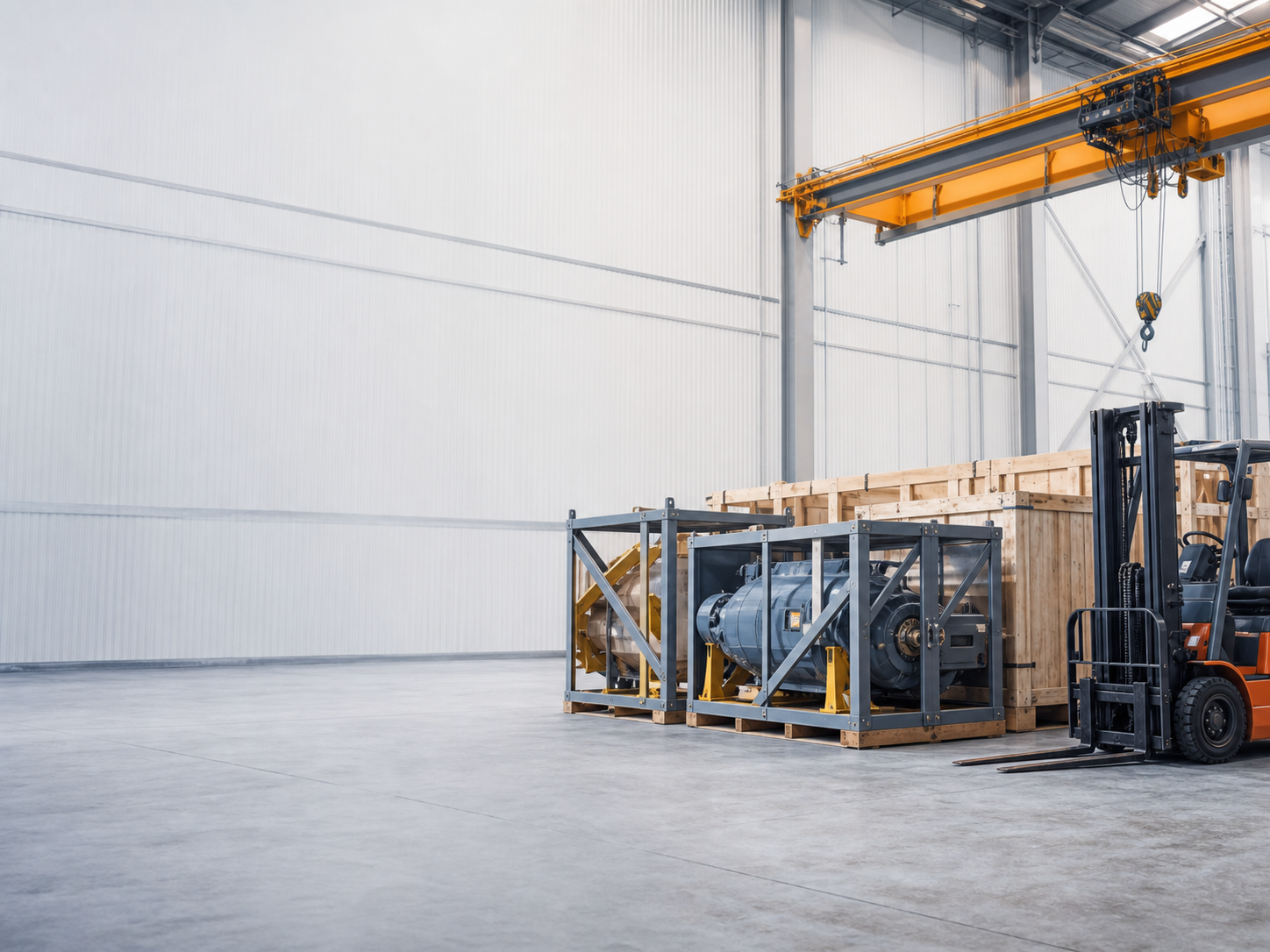
Cargo profile
Heavy machinery shipping from China starts with crated dimensions and weight distribution. Everything downstream — container type, lashing, port, unloading — follows from those numbers.
CNC units, injection moulding, and packaging machines where crate height decides FCL versus flat rack.
Multi-crate shipments sequenced so the installation team unpacks in the order they build.
Cargo over standard door height or width, routed on flat rack or open top with a securing plan.
Urgent line-down parts moved by air while the main unit stays on its ocean schedule.
Engineering checkpoints
Each checkpoint produces a document. Together they are what a carrier, a port, and a receiving plant need in order to accept, load, and unload the unit.
| Checkpoint | What Prodoer checks | Output |
|---|---|---|
| Dimensions & weight | Crated length, width, height, gross weight, and centre of gravity | Equipment fit |
| Container selection | Standard, high-cube, open top, flat rack, or breakbulk | Booking type |
| Lifting & securing | Lifting points, slinging method, and how the unit is lashed to the deck or rack | Lashing plan |
| Export documents | Invoice, packing list, HS code, and machinery-specific certificates | Clean file |
| Destination handling | Crane or forklift capacity, access road, and the unloading window at the plant | Site-ready plan |
Project workflow
Machinery moves once. The planning is front-loaded so the day of loading is uneventful.
Crated dimensions, gross weight, centre of gravity, and lifting points are confirmed against the machine, not the brochure.
We compare standard, high-cube, open-top, flat-rack, and breakbulk options, then issue the lashing and securing plan.
Origin staff attend loading, photograph the securing, and confirm the unit matches the documents before the container is sealed.
Customs, heavy-haul trucking, and unloading equipment are coordinated against the plant's access constraints and receiving window.
FAQ
Out-of-gauge routing, lashing, and what a machinery quote actually needs.
Yes. Out-of-gauge cargo routes on flat rack, open top, or breakbulk depending on which dimension exceeds the box. The assessment happens at quoting: we take crated dimensions and gross weight, check them against each equipment type, and quote the option that can actually be loaded and discharged — including any port surcharges the out-of-gauge routing brings.
Crated length, width, and height, gross weight, centre of gravity, and the lifting points. Photographs of the crated unit help. Without those, any machinery quote is a guess, because they determine container type, lifting method, port handling, and whether the receiving plant can take delivery.
Yes. Securing is not something to settle at the dock. We issue a lashing plan covering how the unit sits, where it is secured, and what protection it carries, then origin staff attend loading and photograph the result as part of the shipment record.
We split it. The main unit stays on its ocean schedule and the line-down part moves by air on a separate booking. That is usually far cheaper than accelerating an entire machinery shipment, and it is the pattern we use for commissioning parts discovered late.
Origin staff attend loading, verify the crate against the packing list and documents, and photograph the securing before the container is sealed. Those photographs stay with the shipment record, which matters if a damage claim is raised at destination.
Machinery project intake
Share the crated size, gross weight, origin plant, and destination. A specialist replies with the equipment options, the lashing approach, and the destination handling requirements.
Share the crated size, gross weight, origin plant, and destination. A specialist replies with the equipment options, the lashing approach, and the destination handling requirements.