Panels
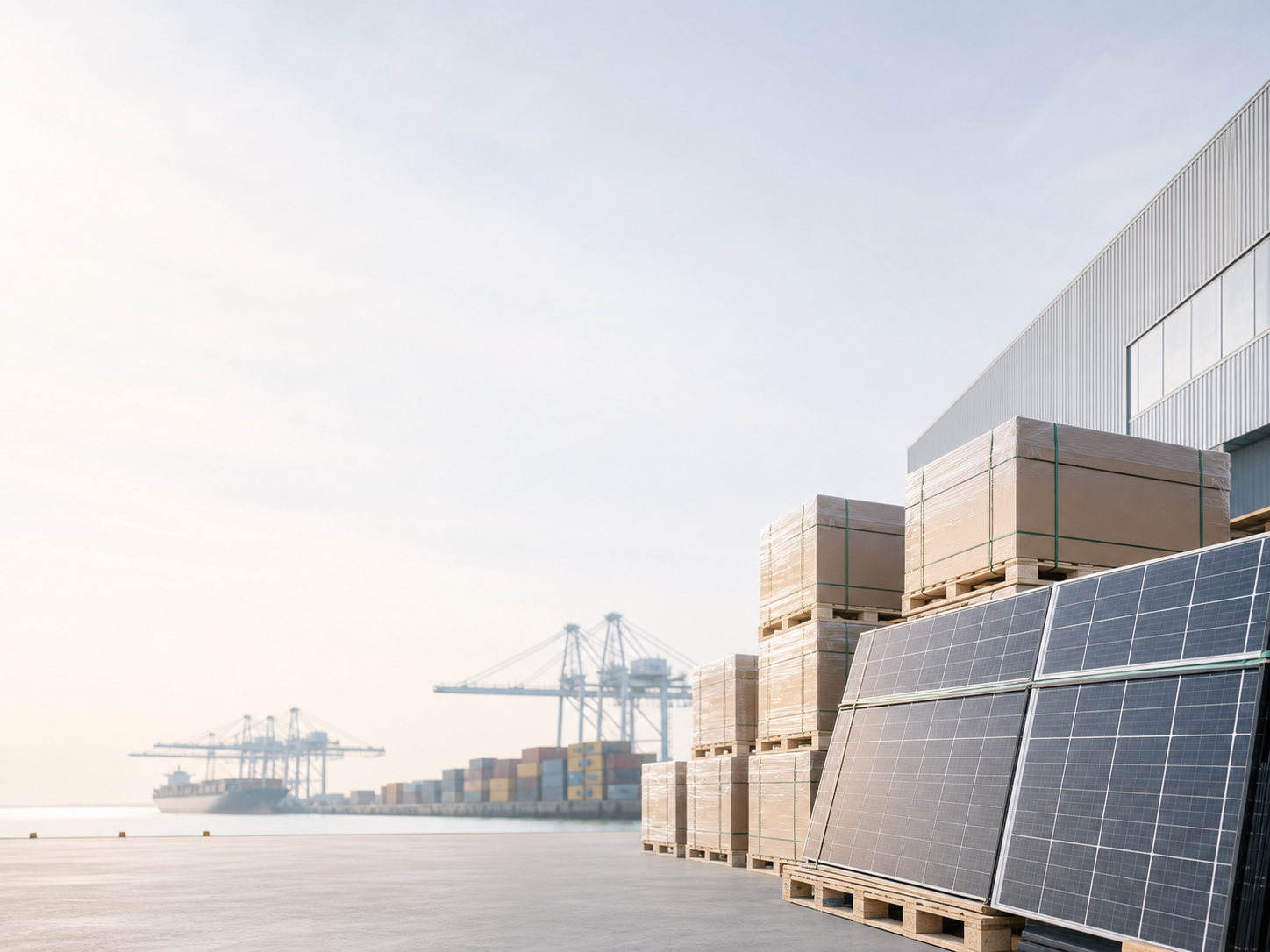
Protect cartons from compression, moisture, and uncontrolled handling across the ocean leg.
Industry logistics · Solar equipment
Solar freight from China is not a container booking. Panels, inverters, mounting systems, and balance-of-system cargo each carry a different handling requirement, so Prodoer plans the loading, port, customs, and final-mile handoffs against the project schedule.
Cargo profile
The right mode and loading plan changes by component, dimensions, fragility, and the date the installation team is ready.
Protect cartons from compression, moisture, and uncontrolled handling across the ocean leg.
Separate electrical equipment from panel loading when weight, packing, or battery content changes the route.
Plan long, dense, or bundled profiles around container utilization and destination unloading capacity.
Sequence the delivery against the site schedule instead of sending every component into one receiving window.
Handling model
The operating detail below is the difference between a rate that looks good and a shipment that can unload at the project site.
| Checkpoint | What Prodoer checks | Output |
|---|---|---|
| Project intake | Component list, dimensions, weights, origin factories | Cargo map |
| Container plan | FCL/OOG fit, loading order, protection, utilization | Load sheet |
| Export docs | Invoice, packing list, HS codes, origin certificates | Clean file |
| Destination handoff | Port, customs, drayage, unloading equipment, delivery window | Site-ready plan |
Project workflow
Every handoff has an owner, a document, and a date the project team can see.
Group panels, inverters, mounting systems, and accessory cargo by origin and handling requirement.
Sequence supplier pickup, consolidation, protection, and loading around the project release date.
Keep sailing, port, customs, and delivery milestones in one shared operating thread.
Coordinate unloading equipment, appointment windows, and phased delivery when the site is ready.
FAQ
Packing, out-of-gauge routing, and phased delivery — the questions project teams ask first.
Panels ship in manufacturer pallets that are designed to stack, but the risk on a long ocean leg is compression, moisture, and rough handling at transshipment. We confirm the pallet spec, stack limit, and securing method at intake, and set the loading order so panel pallets are not carrying the weight of denser cargo like mounting rails.
Inverters usually can. Battery energy storage changes the answer: cells and packs bring dangerous-goods requirements that can force a different packing plan, a different mode, or a separate booking. Send the battery chemistry and watt-hour rating with the component list and we will confirm whether one booking still works.
Yes. Long rails, trackers, and fixed structures are assessed against standard, high-cube, open-top, and flat-rack options before a booking type is chosen. Where the cargo genuinely will not fit a box, we quote the out-of-gauge route with the lashing plan rather than forcing it into a container.
That is usually the point. Sending an entire project into one receiving window creates storage cost and site congestion. We sequence arrivals so mounting systems land before panels, and hold later components against the site's readiness date and unloading equipment.
Solar freight from China most often runs to the USA, Europe, and Australia, and we quote other destinations on the same model. The destination decides the port, the customs path, and — more than anything — whether the site can unload what arrives, so we confirm the receiving capability before the booking.
Solar project intake
Share the origin factories, destination site, component mix, and target installation date. We will return the loading assumptions and delivery handoffs needed for a useful quote.
Share the origin factories, destination site, component mix, and target installation date. We will return the loading assumptions and delivery handoffs needed for a useful quote.