Europe-bound volume
Roughly half the ocean transit at a fraction of the air rate, for cargo heading to Germany, Poland, the Netherlands, or the CIS.
Solutions · Rail freight
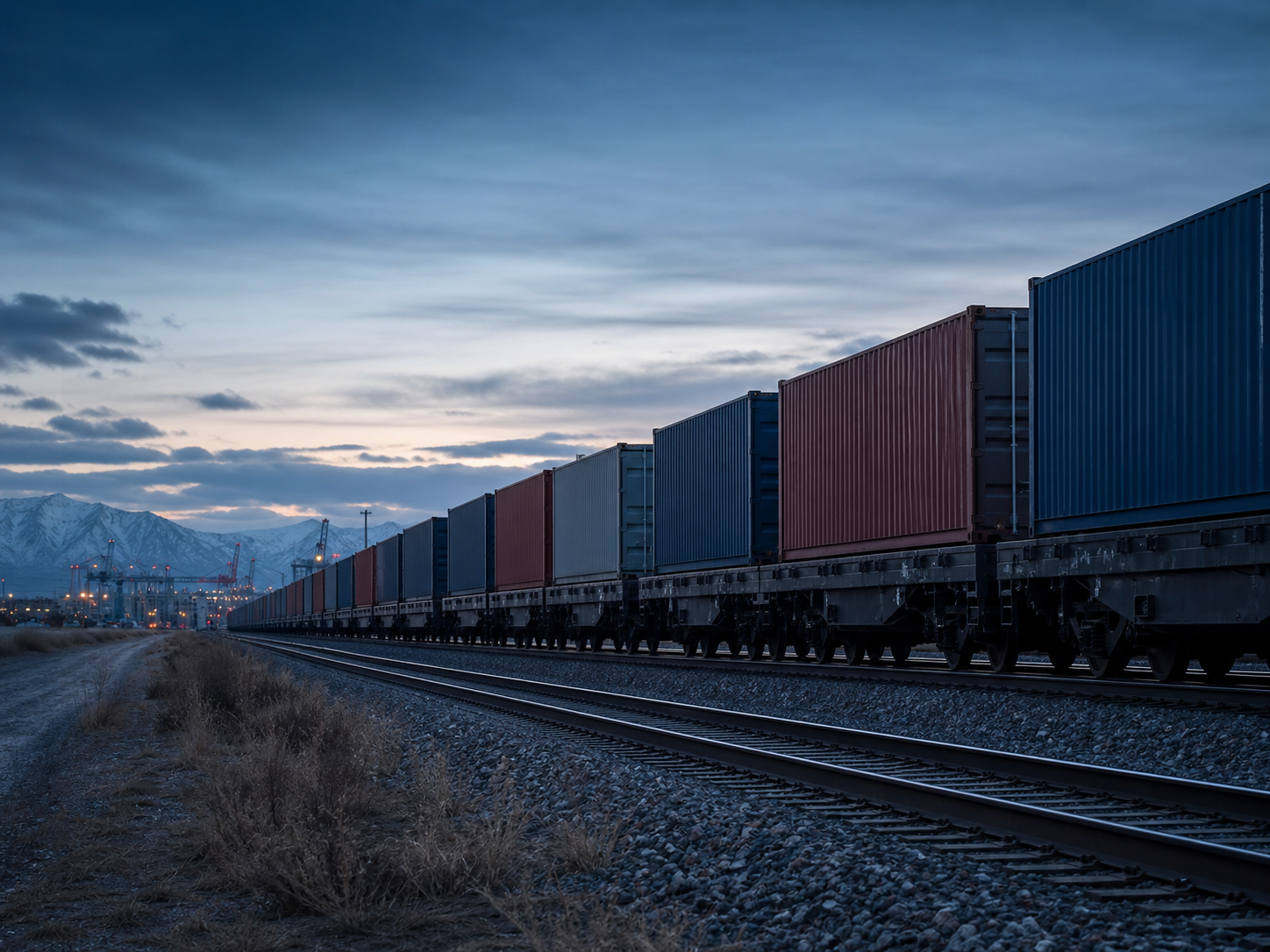
Block trains from Xi'an, Chengdu, Chongqing, and Zhengzhou to Duisburg, Hamburg, Warsaw, and Malaszewicze. Rail freight from China occupies the middle ground most importers need and few forwarders quote properly.
Where rail fits
The China–Europe rail corridor exists for cargo that cannot absorb a five-week sailing but cannot justify air freight either. That describes more shipments than most importers realise.
Roughly half the ocean transit at a fraction of the air rate, for cargo heading to Germany, Poland, the Netherlands, or the CIS.
Restocking that missed the ocean cutoff but does not warrant flying an entire container's worth of inventory.
An alternative routing when Suez, the Red Sea, or port congestion makes the ocean schedule unreliable.
Mode comparison
Planning ranges for China to northern Europe. The right choice depends on how much the difference in days is worth against the difference in rate.
| Mode | Planning range | Typical use |
|---|---|---|
| Air freight | 3–7 days | Launch stock, urgent replenishment |
| Rail freight | 18–22 days | Europe-bound volume that cannot wait |
| Sea freight (FCL) | 28–38 days | Planned volume, lowest cost per unit |
| Sea freight (LCL) | 33–46 days | Smaller or multi-supplier volume |
How it works
Cargo is collected from the factory and trucked to Xi'an, Chengdu, Chongqing, or Zhengzhou for loading.
The container is loaded and sealed, and the export document set is prepared against the departure schedule.
The train runs the corridor with a gauge change at the border. Milestones and any border delay reach you in one thread.
EU customs entry, duty, and onward trucking from the terminal to your warehouse or distribution centre.
FAQ
Transit, departure hubs, cost against air, and what rail will not carry.
The planning range is 18–22 days terminal to terminal on the main corridors, which is roughly half the ocean transit to northern Europe. Add factory collection and trucking to the departure hub at the China end, and customs plus onward trucking at the European end, for the door-to-door figure.
The main departure hubs are Xi'an, Chengdu, Chongqing, and Zhengzhou. Cargo produced in the Pearl River Delta or the coastal provinces is trucked to whichever hub gives the best departure schedule, and that trucking leg is included in the quote rather than left as an extra.
Substantially, on a per-kilo basis. Rail sits between ocean and air on both cost and transit, which is exactly why it is useful. The genuine comparison is not rail against air in the abstract but whether the extra roughly two weeks over air is affordable, and whether the saving over air is larger than the cost of holding stock longer.
Temperature-sensitive goods can struggle with the range of conditions across the corridor, which includes severe winter temperatures. Some dangerous goods and battery categories are restricted, and the rules differ from both air and ocean. Send the commodity details and we will confirm acceptance for the specific corridor before quoting.
Both. Full containers are the straightforward case. Consolidated rail freight is available on the main corridors and is priced by volume, though as with ocean LCL you should expect consolidation and deconsolidation handling to add days at both ends.
Rail freight quote
Send the origin factory, European destination, and cargo volume. One agent replies with the departure hub, the schedule, and rail priced against ocean and air on the same lane.
Send the origin factory, European destination, and cargo volume. One agent replies with the departure hub, the schedule, and rail priced against ocean and air on the same lane.